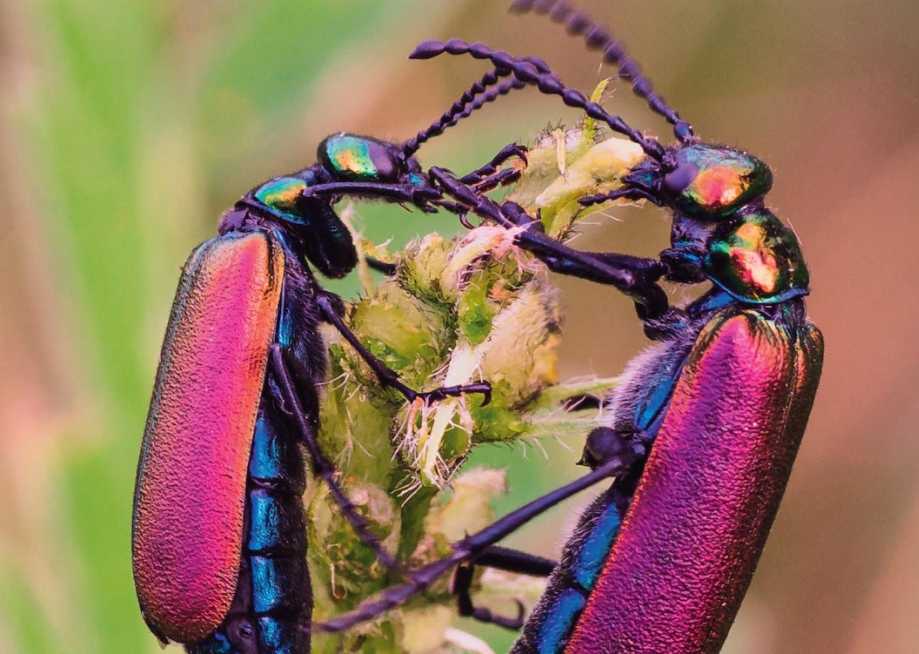
When threatened, Lytta nuttalli secretes cantharidin, a toxic compound known as blister beetle toxin. Even a gentle touch can transfer this oily substance to human skin, causing painful blisters and irritation. The chemical serves as a natural deterrent against predators, from birds to small mammals, who learn to avoid the beetle’s vibrant coloration. Ironically, the same iridescence that attracts admiration also signals danger—a biological strategy known as aposematism.
Native to western North America, the beetle’s life cycle is tied to host plants like legumes, where adults feed and lay eggs. While its metallic sheen may tempt observers to reach out, entomologists stress caution: handling Lytta nuttalli or even brushing against it inadvertently can lead to skin reactions. This striking beetle exemplifies nature’s dual nature—where aesthetic marvels often coexist with survival strategies, reminding us to admire wildlife from a respectful distance.